The Real Advantages of Design-Build for Southern California Home Projects
Design-build gives homeowners one accountable team, faster decisions, better coordination, and fewer costly surprises. Here is why that matters on real Southern California remodels and custom home projects.
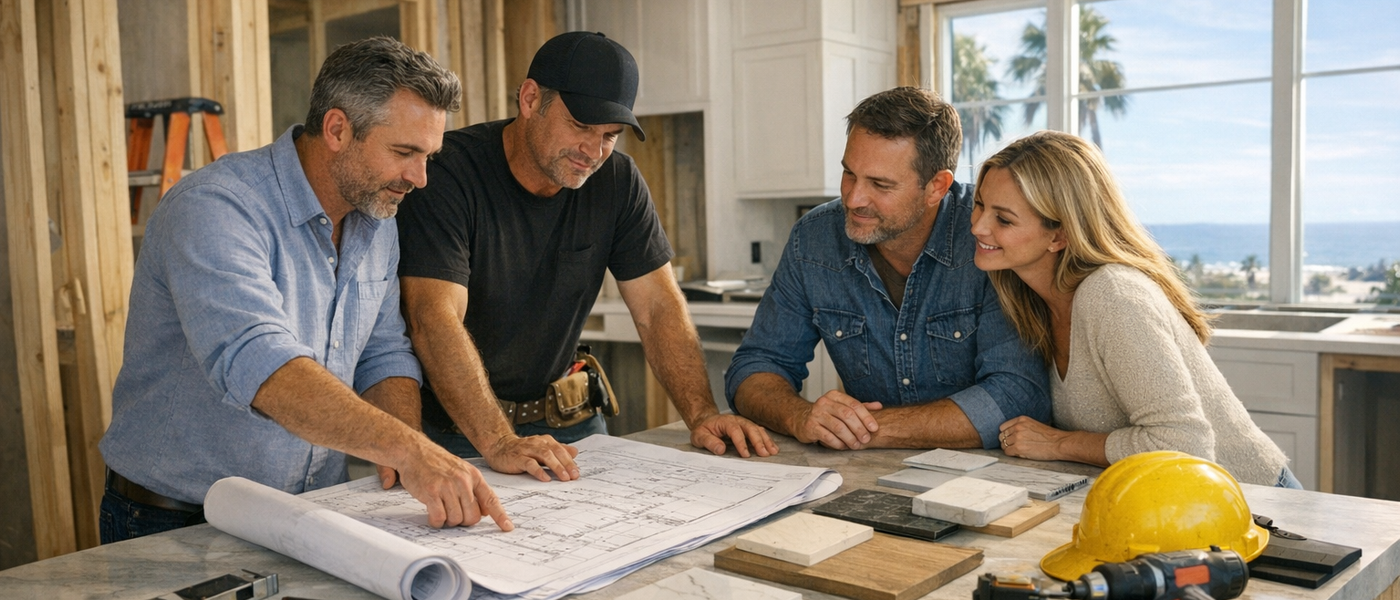
Most homeowners do not start a remodel or custom build worried about project delivery methods. They worry about mixed messages, missed details, budget drift, and the awful feeling that the architect, builder, and homeowner are all working from different playbooks. That is exactly why the advantages of design-build matter. In Southern California, where projects often involve tight lots, layered approvals, existing-structure surprises, and high expectations for finish quality, a disconnected process can create headaches fast.
Design-build fixes a lot of that by putting design and construction under one roof. The Design-Build Institute of America describes design-build as one team, one contract, and one unified flow of work from concept through completion. That sounds simple, and it is. But the practical impact is bigger than most people realize.
The biggest advantage of design-build is clear accountability
In a traditional setup, the homeowner often sits in the middle. The designer draws it, the contractor prices it, and if something does not line up, the homeowner is left sorting through finger-pointing. With design-build, there is a single point of responsibility. That means decisions move faster, problems get solved earlier, and the team is aligned around the same scope, schedule, and budget goals.
This is not just marketing language. DBIA consistently frames the model around reduced fragmentation and reduced owner risk because the same integrated team carries the project from concept to completion through one unified contract structure. For a homeowner, that usually means fewer handoff mistakes and fewer situations where one party blames another for gaps in the plans or unexpected field conditions.
On a real home project, that can look like this: the designer wants a steel beam for an open-plan kitchen, the builder reviews framing access and installation logistics early, and the budget implications are discussed before the drawings are pushed too far. You get better answers sooner.
Why design-build often leads to faster delivery
Another of the real advantages of design-build is speed, but not in the sloppy sense. It is about reducing dead time. Design and construction can overlap in smart ways, procurement planning can start earlier, and builder input shows up before the documents are fully baked. According to the Federal Highway Administration's Design-Build Effectiveness Study, early contractor involvement improves constructability and can reduce cost and schedule growth. That same principle applies at the residential scale.
Southern California projects benefit from this because scheduling is rarely straightforward. There may be long-lead windows and doors, structural coordination, utility work, or phased construction while the family still occupies part of the house. A design-build team can make those sequencing decisions earlier instead of waiting until a completed design package lands on a contractor's desk.
DBIA also points to faster delivery as a core benefit of the design-build process, largely because the team is collaborating from the start rather than passing work between separate silos. For homeowners, that can mean fewer delays caused by redesign, repricing, or conflicting assumptions.
Better constructability means fewer surprises in the field
Some of the most expensive problems in construction are not dramatic failures. They are the small disconnects that stack up. A detail that looks great on paper but is awkward to build. A finish selection that changes framing, waterproofing, or lead times. A layout that technically fits but creates HVAC or lighting conflicts.
Design-build helps catch those issues early because the people drawing the work and the people building the work are talking from day one. The FHWA study specifically highlights the value of early contractor involvement and improved constructability. That matters on residential projects where existing conditions are often imperfect. Older homes in Southern California can hide framing irregularities, outdated systems, and additions built decades apart. Early builder input makes it easier to design around reality instead of designing in a vacuum.
That also tends to reduce change orders. No delivery method eliminates them completely, especially on remodels, but an integrated team has a better chance of spotting scope conflicts before demolition starts. Less rework usually means better cost control and less frustration for the homeowner.
The collaboration is not just nicer, it is more effective
Homeowners often assume collaboration is a soft benefit. It is not. It is a practical one. A collaborative team is more likely to solve problems without turning every issue into a contract dispute. DBIA has written about how stronger collaboration improves alignment and supports better project outcomes. That is one reason design-build tends to feel more organized and less adversarial than separated design and bid-build structures.
For a homeowner, this shows up in meetings that are actually useful. Instead of hearing, 'We need to ask the architect,' or, 'The contractor will have to price that later,' you are often getting design, budget, and buildability feedback in the same conversation. That saves time, but it also leads to better decisions because tradeoffs are visible earlier.
If you are trying to balance layout changes, material priorities, and a realistic investment range, that kind of integrated feedback is hard to overstate.
Design-build shines on complex and time-sensitive projects
Not every project needs the same delivery method, but design-build is especially strong when the schedule matters, the scope is technically involved, or the homeowner wants close coordination between aesthetics and execution. The FMI and DBIA market research report points to design-build's value on complex, critical-schedule work because the model supports schedule compression, risk management, and stronger team integration.
That lines up with what we see in residential work. Major whole-home remodels, additions tied into existing structures, hillside projects, and custom homes with detailed finish packages all benefit from having design and construction decisions tied together early. The more moving parts there are, the more valuable coordination becomes.
Practitioner experience supports this too. HKS has written about how design-build helps teams respond faster and coordinate better on demanding projects. While that article focuses on larger recovery settings, the lesson carries over. A unified team adapts more efficiently when conditions shift.
Cost value is about more than the low bid
One common misconception is that the best project is the one with the cheapest construction number at the start. That is rarely the whole story. Good homeowners care about total value, risk exposure, durability, and how many surprises show up after work begins.
DBIA and federal research both support the idea that design-build can improve value through integrated delivery, reduced cost growth, and clearer accountability by aligning design and construction objectives from the beginning and reducing the conditions that often cause schedule and cost growth. That does not mean design-build is automatically the cheapest path on paper. It means it often produces better budget discipline because the builder is pricing, advising, and planning while the design is still taking shape.
For residential clients, that can be the difference between a project that stays grounded in real-world construction and one that has to be repeatedly redesigned after bids come in too high.
What homeowners should look for in a design-build team
The model works best when the team truly operates as one group. Ask how design decisions are priced, how selections are tracked, how constructability reviews happen, and who owns communication from first sketches through final punch. A strong design-build firm should be able to explain its process in plain English.
It is also worth noting that design-build is flexible. DBIA outlines multiple approaches, including best-value and progressive design-build methods, which shows that the system can be tailored to project goals rather than forced into one rigid format. For homeowners, the right version is the one that creates honest budgeting, early coordination, and clear decision-making.
At Nexor Builders, we like design-build because it reflects how good projects actually get built. Thoughtful design, practical construction knowledge, steady communication, and one accountable team. That is how you protect quality and keep momentum.
If you are planning a remodel, addition, or custom home in Southern California and want a process with fewer disconnects and better coordination, book a free consultation.